
Top Factors That Increase Property Value Over Time
Factors That Increase Property Value are often misunderstood by homebuyers and even some investors. Many people believe that property appreciation happens automatically with time. In reality, property value behaves more like a masterpiece painting than a savings account. Just as Pablo Picasso transformed simple shapes into extraordinary works of art, successful real estate appreciation is created by the interaction of multiple factors working together over years.
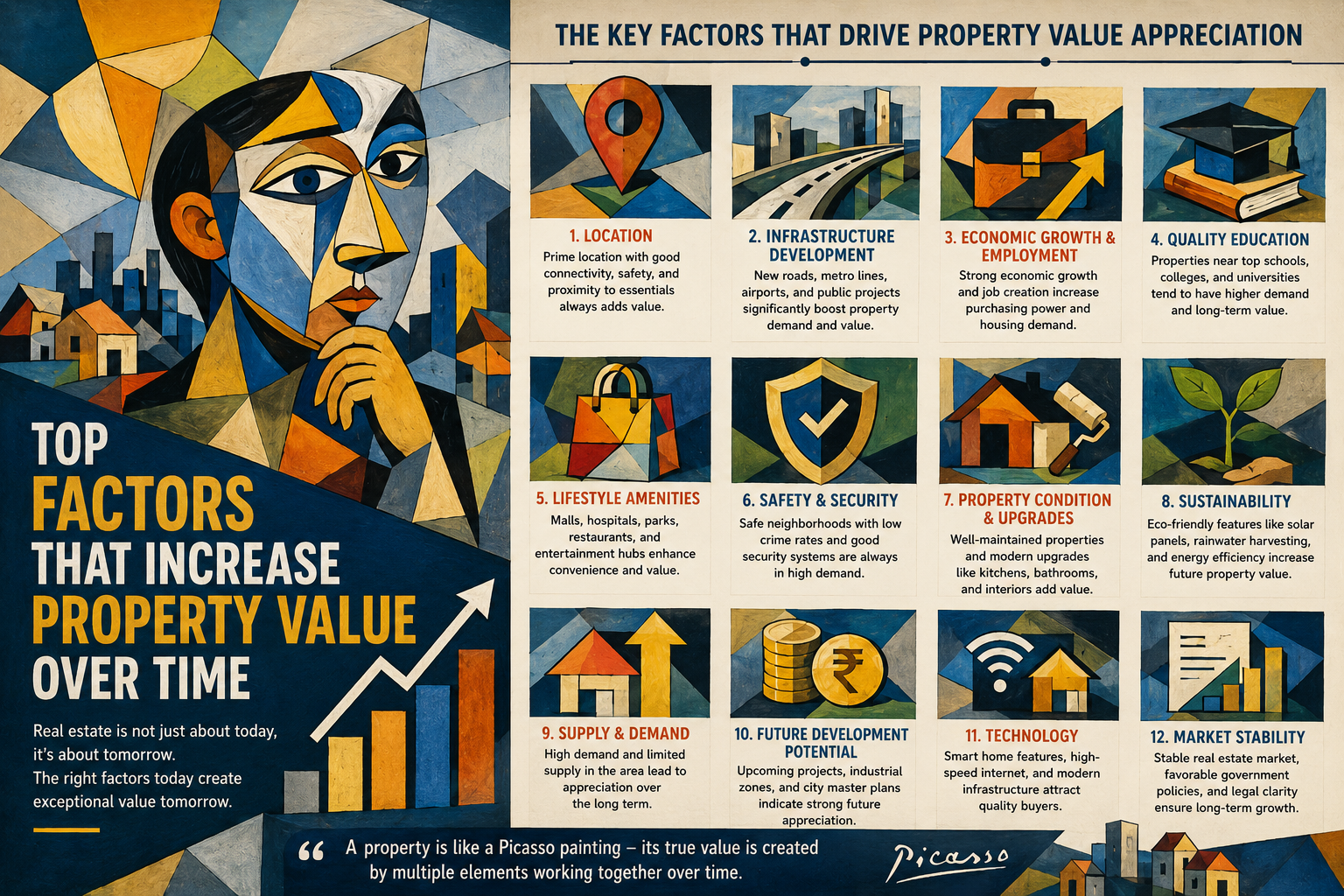
A property is not merely land and walls. It is a living asset influenced by economics, infrastructure, demographics, technology, and human behavior. Understanding the factors that increase property value can help homeowners maximize returns and investors make smarter decisions.
In this guide, we explore the most important drivers of long-term property appreciation and how they shape the future value of real estate.
Factors That Increase Property Value Over Time
Property value growth is primarily driven by demand exceeding supply. As cities expand, populations grow, and infrastructure improves, desirable locations become more valuable.
Factors That Increase Property Value
Economic development
Population growth
Infrastructure projects
Limited land availability
Improved neighborhood quality
Properties located in areas benefiting from these trends often outperform the broader market.
Location: The Most Powerful Factor That Increases Property Value
When discussing factors that increase property value, location remains the undisputed champion.
Factors That Increase Property Value
Access to Employment Hubs
Properties near major business districts tend to appreciate faster because professionals prefer shorter commutes.
Why It Matters
Increased demand from working professionals
Higher rental income potential
Strong resale demand
Connectivity and Transportation
Infrastructure projects often create substantial property appreciation.
Examples
Metro rail networks
Expressways
Ring roads
Airport expansions
A new transportation project can dramatically increase demand for nearby properties.
Infrastructure Development and Urban Expansion
Cities constantly evolve. Areas once considered remote can become premium investment destinations within a decade.
Government Infrastructure Projects
Major public investments often increase surrounding property values.
Examples of Value-Creating Projects
Smart city initiatives
Commercial districts
IT parks
Industrial corridors
Educational institutions
Properties located near future development zones often experience significant appreciation before construction is even completed.
Neighborhood Quality and Lifestyle Amenities
Modern buyers seek more than just a home. They seek convenience, safety, and quality of life.
Amenities That Attract Buyers
Parks and green spaces
Shopping centers
Hospitals
Schools
Entertainment hubs
The presence of these facilities can substantially increase both demand and property value.
Safety and Security
Low-crime neighborhoods generally command higher property prices because families prioritize security when choosing a home.
Property Upgrades and Renovations
One of the few factors that increase property value that owners can directly control is property improvement.
Before investing in any property, buyers should also learn How to Check Property Documents Before Buying a House to ensure the investment is legally secure and free from ownership disputes.
High-Impact Renovations
Certain upgrades consistently deliver strong returns.
Examples
Modern kitchens
Energy-efficient systems
Bathroom renovations
Smart home technology
Improved landscaping
These improvements enhance both functionality and buyer appeal.
Curb Appeal
First impressions matter.
A well-maintained exterior can significantly influence a buyer’s perception and increase market value.
Supply and Demand Dynamics
Real estate markets are governed by supply and demand.
Limited Housing Supply
When housing inventory is low and demand is strong, property values generally rise.
Population Growth
Growing populations create additional housing demand.
Areas That Benefit Most
Expanding cities
Emerging suburbs
Economic growth centers
Population growth remains one of the strongest long-term indicators of future property appreciation.
Economic Growth and Employment Opportunities
Economic strength directly impacts real estate values.
Job Creation
Areas experiencing employment growth often see rising property prices.
Why Employment Matters
Higher household income
Increased housing demand
Greater purchasing power
Cities attracting major employers frequently experience above-average property appreciation.
Educational Institutions and School Quality
Families often prioritize education when choosing where to live.
Impact of Good Schools
Properties near highly rated schools typically maintain stronger demand.
Benefits
Consistent buyer interest
Higher resale value
Better long-term appreciation
School districts often influence property values more than many investors realize.
Technology and Smart Living Trends
Technology is becoming an increasingly important factor that increases property value.
Features Buyers Prefer
Smart security systems
Home automation
Energy management systems
High-speed internet infrastructure
As technology adoption grows, smart homes are becoming more attractive to modern buyers.
Sustainability and Green Buildings
Environmental awareness is transforming real estate markets.
Sustainable Features That Add Value
Solar panels
Rainwater harvesting
Energy-efficient appliances
Green certifications
Buyers are increasingly willing to pay a premium for environmentally friendly properties.
Future Development Potential
Experienced investors often focus on future opportunities rather than current conditions.
Indicators of Future Growth
Proposed infrastructure projects
Upcoming commercial developments
Government master plans
Expansion of transportation networks
Understanding future development trends can help investors identify high-growth locations before prices rise.
According to Adani Realty’s analysis of the top factors affecting property value, infrastructure development, neighborhood quality, connectivity, and future growth prospects play a major role in determining long-term real estate appreciation.
Common Mistakes That Limit Property Appreciation
Many property owners unknowingly reduce their property’s potential value.
Neglecting Maintenance
Poor maintenance can negatively affect both resale value and buyer perception.
Ignoring Market Trends
Real estate markets evolve. Failing to adapt to changing buyer preferences can limit appreciation.
Overpricing Renovations
Not every renovation produces a positive return on investment. Focus on improvements that buyers genuinely value.
Property Value Appreciation Checklist
Before investing, evaluate these factors that increase property value:
Essential Checklist
Prime location
Transportation access
Infrastructure development
Economic growth
Employment opportunities
Quality schools
Neighborhood safety
Lifestyle amenities
Property condition
Future development plans
Smart technology features
Sustainability initiatives
Properties that score highly across multiple categories generally have the strongest appreciation potential.
Conclusion
Factors That Increase Property Value extend far beyond the physical structure of a property. Long-term appreciation is shaped by location, infrastructure, economic growth, neighborhood quality, technology, sustainability, and future development potential.
Successful investors view real estate the way an artist views a masterpiece—not as a static object, but as something that evolves and gains value over time. By understanding these factors that increase property value, buyers can identify opportunities, minimize risk, and maximize long-term returns.
Whether you are purchasing your first home or building an investment portfolio, focusing on these appreciation drivers can help you make smarter and more profitable real estate decisions.