
How to Check Property Documents Before Buying a House
Property document verification is one of the most important steps before purchasing a house. Many buyers focus on location, price, and amenities, but fail to verify legal documents properly. This mistake can lead to ownership disputes, financial losses, and legal complications.
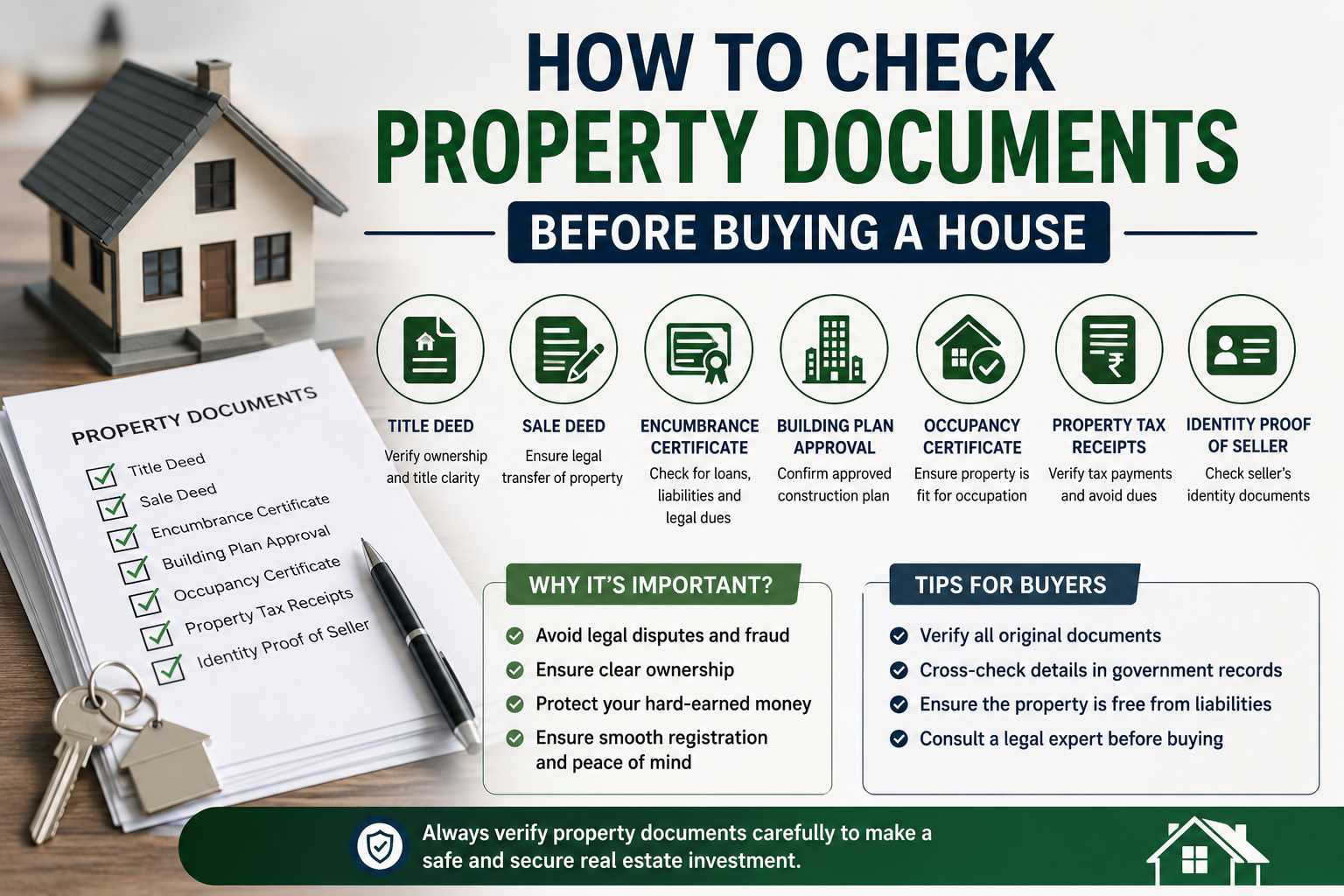
Whether you are a first-time homebuyer or an experienced investor, understanding how to check property documents before buying a house can help you make a secure and informed decision. Buyers should also understand the differences between Ready-to-Move vs Under-Construction Property before making a real estate investment.
Why Property Document Verification Is Important
Before investing your hard-earned money, it is essential to ensure that the property has a clear legal status and that the seller has the right to transfer ownership.
Benefits of Property Document Verification
Prevents legal disputes
Confirms ownership rights
Protects against fraud
Ensures smooth property registration
Increases buyer confidence
Proper verification can save buyers from costly mistakes and future legal problems.
Essential Property Documents to Check Before Buying a House
Several documents must be verified before finalizing a property purchase.
Title Deed
The title deed is one of the most important documents in property document verification.
It confirms who legally owns the property and whether the seller has the right to transfer ownership.
What to Check
Seller’s name matches ownership records
No ownership disputes
Clear transfer history
Sale Deed
The sale deed serves as proof of ownership transfer from the seller to the buyer.
What to Check
Property details are accurate
Seller and buyer information is correct
Registration details are complete
Encumbrance Certificate
An encumbrance certificate shows whether the property has any legal or financial liabilities.
What to Check
Existing loans
Mortgages
Legal claims
Property disputes
This document helps buyers confirm that the property is free from financial obligations.
Verify Government Approvals
Government approvals are critical for ensuring that the property complies with local regulations.
Building Plan Approval
Verify whether the construction has been approved by the local authority.
Check for
Approved building layout
Compliance with local regulations
Authorized construction plans
Occupancy Certificate
An occupancy certificate confirms that the building is safe and ready for occupation.
Importance of Occupancy Certificate
Ensures legal occupancy
Confirms compliance with building standards
Required for utility connections in many areas
Completion Certificate
The completion certificate indicates that construction has been completed according to approved plans.
Check Property Tax Records
Property tax records can reveal important information about the property’s legal standing.
What to Verify
Property tax payment status
Outstanding dues
Correct owner details
Unpaid taxes can become a liability for the new owner after purchase.
Verify Identity of the Seller
One of the most overlooked aspects of property document verification is confirming the identity of the seller.
Documents to Verify
Government-issued ID
PAN Card
Aadhaar Card
Address proof
Ensure that the seller’s identity matches the ownership records in official documents.
Check for Existing Loans and Mortgages
Many properties are financed through bank loans.
Why This Matters
If a property has an active mortgage, the buyer may face complications during ownership transfer.
Verify
Loan clearance status
No-objection certificate from lender
Outstanding liabilities
An encumbrance certificate can help identify existing loans and mortgages.
Review Possession and Registration Documents
Possession and registration records provide additional evidence of ownership.
Possession Letter
The possession letter confirms when possession was handed over to the owner.
Registration Documents
Verify that all registration documents have been properly executed and recorded with the appropriate authority.
Common Mistakes Buyers Should Avoid
Many buyers make avoidable mistakes during property document verification.
Skipping Legal Verification
Never rely solely on verbal assurances from sellers or brokers.
Ignoring Encumbrance Checks
Failure to verify financial liabilities can result in future legal complications.
Not Consulting a Legal Expert
Homebuyers can also review Investopedia’s guide to real estate investing and property ownership for additional information before making a purchase.
Property Document Verification Checklist
Before buying a house, ensure you verify the following:
Essential Checklist
Title Deed
Sale Deed
Encumbrance Certificate
Building Plan Approval
Occupancy Certificate
Completion Certificate
Property Tax Receipts
Seller Identity Documents
Loan Clearance Documents
Registration Records
Following this checklist can significantly reduce the risks associated with property purchases.
Conclusion
Property document verification is a critical step that every homebuyer should complete before purchasing a house. Verifying ownership records, legal approvals, tax receipts, and financial liabilities can help you avoid fraud and legal disputes.
Before finalizing any transaction, carefully review all relevant documents and consider consulting a qualified legal professional. Taking the time to perform proper property document verification can protect your investment and ensure a smooth property ownership experience.