
Ready-to-Move vs Under-Construction Property: Which Is Better for Homebuyers?
Ready-to-Move vs Under-Construction Property is one of the most common comparisons made by homebuyers and real estate investors. Choosing between these two property types can significantly impact your budget, investment returns, and overall buying experience.
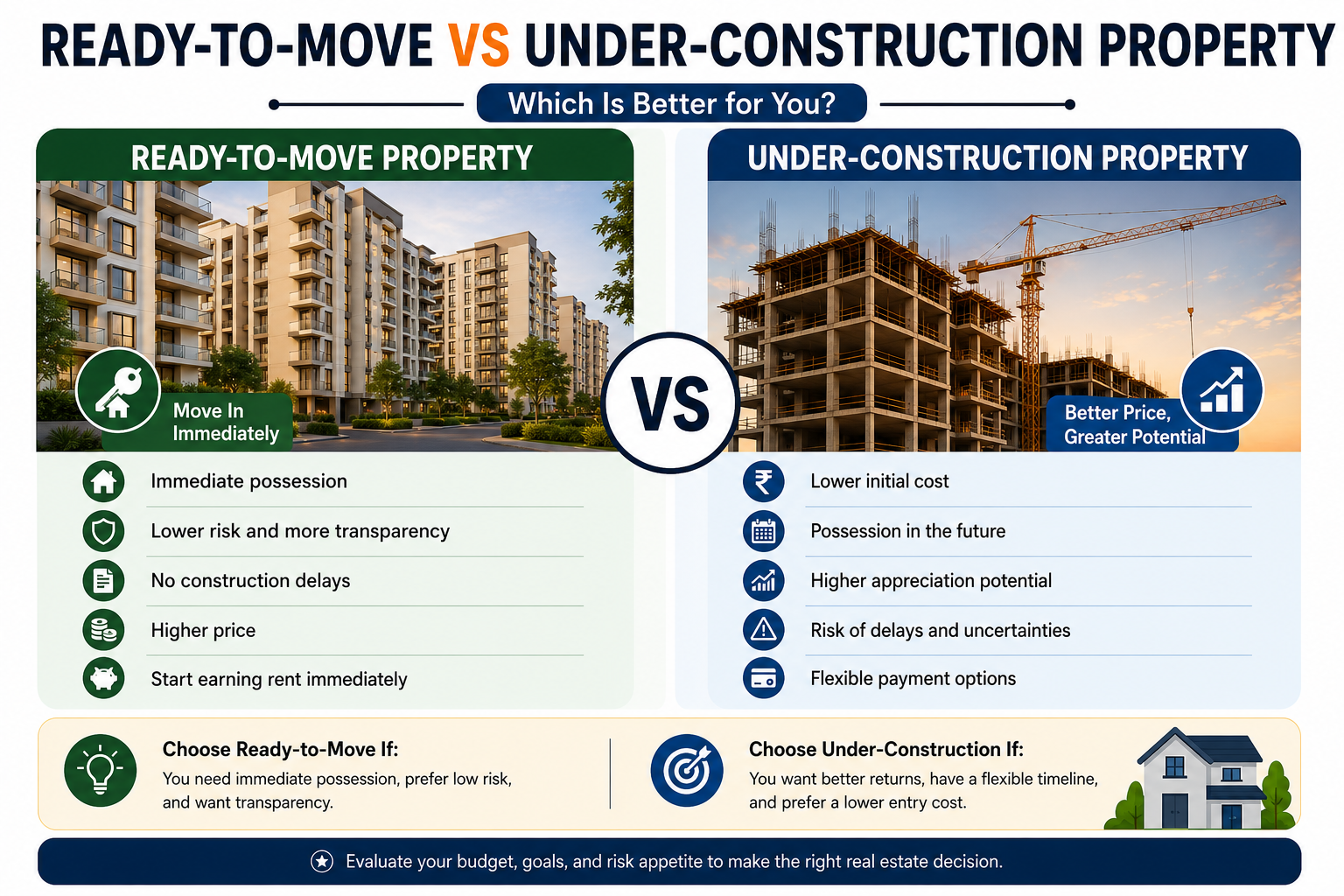
While ready-to-move properties offer immediate possession and lower risk, under-construction properties often provide lower prices and better appreciation potential. Understanding the differences can help you make an informed decision based on your financial goals and lifestyle requirements.
What Is a Ready-to-Move Property?
A ready-to-move property is a completed property that is available for immediate possession. Buyers can inspect the actual property before making a purchase decision.
Benefits of Ready-to-Move Property
Immediate possession
No construction delays
What you see is what you get
Lower investment risk
Easier decision-making process
Drawbacks of Ready-to-Move Property
Higher purchase price
Limited customization options
Higher upfront investment
What Is an Under-Construction Property?
An under-construction property is a project that is still being developed by the builder. Buyers purchase the property before completion and receive possession once construction is finished.
Benefits of Under-Construction Property
Lower initial purchase cost
Flexible payment plans
Potential for higher appreciation
More choices in unit selection
Drawbacks of Under-Construction Property
Possession delays
Construction-related uncertainties
Dependence on builder performance
Market fluctuation risks
Ready-to-Move vs Under-Construction Property: Key Differences
Understanding the key differences between Ready-to-Move vs Under-Construction Property can help buyers select the most suitable option.
Price Comparison
Ready-to-move properties generally cost more because buyers receive immediate ownership and certainty.
Under-construction properties are often available at discounted rates during the early stages of development.
Possession Timeline
A ready-to-move property can be occupied immediately after purchase.
An under-construction property may take several months or years before possession is granted.
Investment Potential
Under-construction properties often offer better appreciation opportunities because prices may increase as the project nears completion.
Ready-to-move properties provide stability but may have relatively lower appreciation potential.
Risk Factor
Ready-to-move properties carry lower risk because buyers can physically inspect the property before purchasing.
Under-construction properties involve risks such as project delays, regulatory issues, or builder-related challenges.
Advantages of Ready-to-Move Property
Immediate Rental Income
Investors can start earning rental income immediately after purchase.
No GST Burden
In many situations, ready-to-move properties may not attract GST, reducing overall costs.
Better Transparency
Buyers can evaluate the actual condition, quality, and surroundings of the property.
Advantages of Under-Construction Property
Lower Entry Cost
Under-construction properties generally have a lower purchase price than completed units.
Higher Appreciation Potential
As the project progresses, property values may increase significantly.
Flexible Payment Options
Builders often offer attractive payment plans to encourage early buyers.
Factors to Consider Before Buying
Before choosing between Ready-to-Move vs Under-Construction Property, consider the following factors:
Budget
Assess whether you can afford the higher cost of a ready-to-move property or prefer the lower entry cost of an under-construction unit.
Risk Tolerance
Risk-averse buyers may prefer ready-to-move properties, while investors seeking higher returns may consider under-construction projects.
Urgency of Possession
If you need a home immediately, a ready-to-move property is usually the better option.
Builder Reputation
For under-construction projects, always verify the builder’s track record and project history.
For additional information about real estate investments and property ownership, readers can explore Investopedia’s real estate resources.
Which Option Is Better?
The choice between Ready-to-Move vs Under-Construction Property depends on individual needs and investment goals.
Choose a ready-to-move property if:
You need immediate possession.
You prefer lower risk.
You want complete transparency before purchase.
Choose an under-construction property if:
You are looking for better appreciation potential.
You have a flexible timeline.
You want a lower purchase price and payment flexibility.
Conclusion
Ready-to-Move vs Under-Construction Property is not a one-size-fits-all decision. Both options offer unique advantages and disadvantages. Ready-to-move properties provide certainty, immediate occupancy, and lower risk, while under-construction properties offer affordability, flexible payment plans, and stronger appreciation potential.
Before making a purchase, evaluate your budget, risk tolerance, possession requirements, and long-term investment objectives. A well-informed decision can help you maximize the value of your real estate investment and achieve your property ownership goals.