
Freehold vs Leasehold Property: What’s the Difference and Which Is Better?
Buying a property is one of the most significant financial decisions a person can make. However, many homebuyers focus only on location, price, and amenities while overlooking an important aspect of ownership: whether the property is freehold or leasehold.
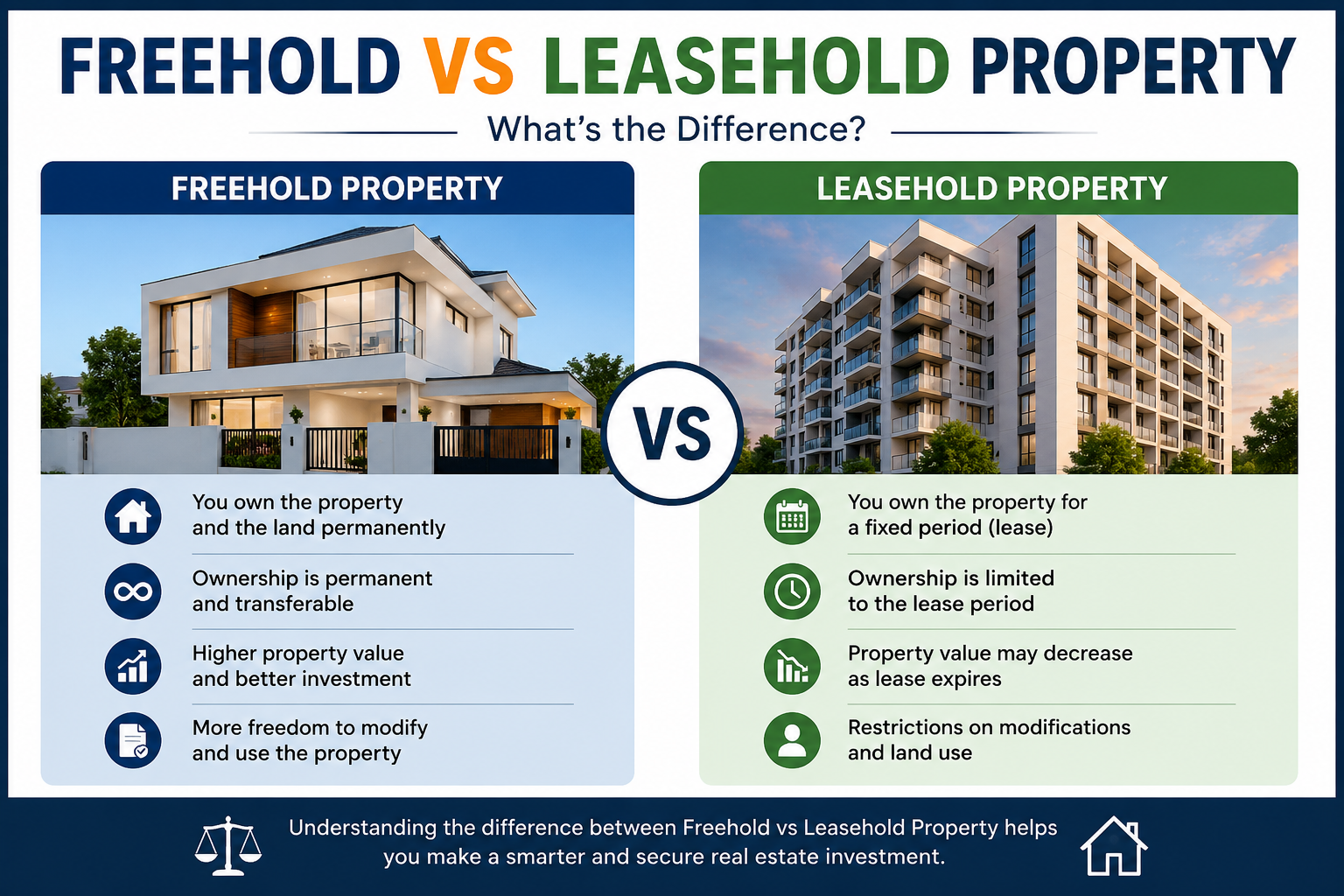
Freehold vs Leasehold Property Understanding the difference between freehold vs leasehold property is essential because it directly affects ownership rights, property value, financing options, and long-term investment potential. Before purchasing a house, apartment, or commercial property, it is important to know which type of ownership best suits your needs.
In this guide, we will explain everything you need to know about freehold vs leasehold property, including their advantages, disadvantages, and key differences.
Freehold vs Leasehold Property: What Is a Freehold Property?
A freehold property is a property in which the buyer owns both the building and the land on which it is built. The ownership remains with the buyer indefinitely and can be transferred, sold, inherited, or gifted without any time restrictions.
In simple terms, when you purchase a freehold property, you become the absolute owner of the property and the land associated with it.
Freehold vs Leasehold Property: Features of Freehold Property
- Complete ownership of land and building
- No time limit on ownership
- Easier property transfer and inheritance
- Higher resale value
- Greater freedom for modifications and renovations
- Better financing options from banks and financial institutions
Because of these benefits, freehold properties are generally considered more attractive to homebuyers and investors.
Freehold vs Leasehold Property: What Is a Leasehold Property?
A leasehold property is a property where the buyer owns the building or structure but not the land on which it stands. Instead, the land is leased from the original owner, usually for a fixed period.
Freehold vs Leasehold Property: The lease period may range from 30 years to 99 years or even longer, depending on the agreement. Once the lease expires, ownership rights may revert to the landowner unless the lease is renewed.
Features of Leasehold Property
- Ownership is limited to the lease period
- Land ownership remains with the lessor
- Lease renewal may involve additional costs
- Restrictions may apply to property modifications
- Lower purchase price compared to freehold properties
- Potential decrease in value as lease expiration approaches
Leasehold properties are commonly found in government developments, housing societies, and commercial projects.
Freehold vs Leasehold Property: Key Differences
Understanding the differences between freehold vs leasehold property can help buyers make informed decisions.
Ownership Rights
In a freehold property, the buyer owns both the land and the building permanently.
In a leasehold property, ownership is limited to the duration of the lease agreement, while the land remains under the ownership of the lessor.
Duration of Ownership
Freehold ownership is permanent and has no expiration date.
Leasehold ownership lasts only for the agreed lease period, such as 30, 60, or 99 years.
Property Value
Freehold properties generally appreciate more over time because they offer complete ownership rights.
Leasehold properties may experience depreciation as the lease term decreases, especially when renewal options are uncertain.
Financing and Home Loans
Banks usually prefer financing freehold properties because ownership rights are clear and permanent.
Obtaining loans for leasehold properties can sometimes be more difficult, particularly when the remaining lease period is short.
Modification Rights
Freehold property owners typically have greater flexibility to renovate or modify their property, subject to local regulations.
Leasehold property owners may require permission from the landowner before making major structural changes.
Advantages of Freehold Property
Many buyers prefer freehold properties due to their long-term benefits.
Complete Ownership
You have full ownership of both the land and the structure, giving you complete control over your property.
Better Investment Potential
Freehold properties often experience higher appreciation rates and stronger resale demand.
Easier Property Transfer
Higher Market Demand
Most homebuyers actively seek freehold properties, making them easier to sell in the future.
Advantages of Leasehold Property
Although freehold ownership is often preferred, leasehold properties also offer certain benefits.
Lower Initial Cost
Leasehold properties are generally less expensive than freehold properties in the same location.
Affordable Entry into Premium Areas
Buyers may gain access to high-demand locations at a lower price point.
Suitable for Short-Term Ownership
Individuals who do not intend to keep a property for decades may find leasehold properties more practical and affordable.
Disadvantages of Freehold Property
While freehold properties offer many benefits, there are a few drawbacks.
Higher Purchase Price
Because of complete ownership rights, freehold properties are usually more expensive.
Greater Responsibility
Owners are fully responsible for maintenance, taxes, and legal compliance related to the property.
Disadvantages of Leasehold Property
Leasehold ownership comes with several limitations that buyers should consider.
Lease Expiration Risk
The value of the property may decline as the lease period approaches expiration.
Renewal Costs
Lease renewal can involve substantial fees and administrative procedures.
Limited Control
Property owners may face restrictions regarding renovations, redevelopment, or usage.
Lower Resale Appeal
Many buyers prefer freehold properties, which can make leasehold properties harder to sell.
Which Is Better: Freehold or Leasehold Property?
The answer depends on your financial goals, investment strategy, and ownership preferences.
A freehold property is usually the better option if:
- You want long-term ownership.
- You are looking for maximum investment appreciation.
- You plan to pass the property to future generations.
- You want complete control over the property.
A leasehold property may be suitable if:
- You have a limited budget.
- You need property ownership for a shorter period.
- The location offers strong value despite lease restrictions.
- The remaining lease period is sufficiently long.
For most residential buyers and long-term investors, freehold ownership is generally considered the safer and more valuable choice.
Conclusion
Understanding the difference between freehold vs leasehold property is crucial before making any real estate investment. While freehold properties offer complete ownership, greater flexibility, and stronger appreciation potential, leasehold properties can provide a more affordable entry point into desirable locations.
Before purchasing any property, carefully review ownership documents, lease agreements, financing options, and long-term implications. For additional insights into property ownership structures, you can also refer to Investopedia’s guide on leasehold property. Taking the time to understand these factors can help you make a smarter investment decision and avoid future complications.
Whether you choose a freehold or leasehold property, ensuring proper legal verification and due diligence will always be the key to a successful real estate purchase.